At AK Clinics, we’ve very experienced doctors that identify the causes of hair-loss and advice patients very carefully before undergoing Hair Transplant. We’ve operated many patients with different indication successfully
Understanding Cicatricial Alopecia
Cicatricial alopecia also known as scarring alopecia is a collection of hair loss condition leading to permanent hairloss. The criteria are:
- Hair loss that occurs with permanent destruction of hair follicles
- Often presents with inflammation arising from injury or disease
Scalp lesions may also be present, initially localized, it may become diffuse in chronic presentations. With gradual scarring, scalp becomes smooth without any evidence of hair follicles. Once scarring is initiated, hair loss is permanent.
In the case of cicatricial alopecia the upper part of the hair follicle gets inflamed. This is the area where stem cells and sebaceous gland (oil gland) are located and can get permanently damaged. If this oil gland & stem cells get destroyed the is only a remote possibility of hair follicle regeneration & hence permanent hair loss.
Cicatricial alopecia is a non-communicable disorder that can affect anyone from any race to any age but it is most common in African descendants. It is the cause of about 7% hair loss in worldwide.
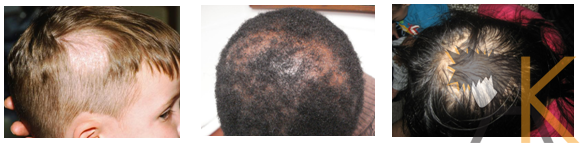
Classification of Cicatricial Alopecia
Broadly cicatricial alopecia is classified into primary or secondary.
- Primary cicatricial alopecia: lichen planopilaris, frontal fibrosing alopecia, central centrifugal alopecia, pseudopelade of Brocq, folliculitis decalvans, tufted folliculitis, and Dissecting cellulitis of the scalp.
- Secondary cicatricial alopecia: Physical trauma, including burns and radio dermatitis, traction alopecia, neoplasms, trichotilomania, etc.
Diagnosis of Cicatricial Alopecia
- Scalp biopsy is essential for the diagnosis of cicatricial alopecia.
- Clinical evaluation of the scalp like itching, burning, pain, or tenderness usually signal ongoing activity. Signs of scalp inflammation include redness, scaling, and pustules.
- Trichoscopy is used for non-invasive differential diagnosis of cicatricial alopecia.
Treatment of Cicatricial Alopecia
Primary cicatricialalopecias are treated by use of anti-inflammatory medications. The goal of treatment is to decrease or eliminate inflammatory cells that are attacking and destroying the hair follicle. Oral medications may include hydroxychloroquine, doxycycline, mycophenolatemofetil, cyclosporine, or corticosteroids. Topical medications may include corticosteroids, tacrolimus, pimecrolimus and other immunomodulator drugs. Triamcinolone acetonide, a corticosteroid, may be injected into inflamed, symptomatic areas of the scalp.
In certain group of cicatricialalopecias (folliculitis decalvans, tufted folliculitis) treatment is directed at eliminating the predominant pathogenic microbes that are invariably involved in the inflammatory process. Oral antibiotics are the mainstay of therapy, and topical antibiotics may be used to supplement the oral antibiotics. In dissecting cellulitis, pathogenic microbes are not usually present
Treatment of the mixed group of cicatricialalopecias (folliculitis keloidalis) may include antimicrobials, isotretinoin, and anti-inflammatory medication.
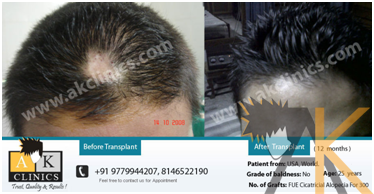
Recommendations on Hair Transplant, Hair Regrowth or Scalp Reduction in patients with CicatricialAlopecias












Leave a Comment