Medical Disclaimer: This article is for informational and educational purposes only and does not replace medical advice. Thyroid conditions vary from person to person. Always consult a qualified physician, endocrinologist, or dermatologist for diagnosis and treatment.
Is your thyroid imbalance making your hair weak and your skin dry? Understand the symptoms and causes with expert guidance from AK Clinics.
The thyroid is a butterfly-shaped gland at the front of the neck that produces T3 (Triiodothyronine) and T4 (Thyroxine), the hormones essential for metabolism, cell turnover, skin renewal, and the hair growth cycle. When these hormones fluctuate, the effects often appear in the hair and skin before other symptoms, such as fatigue, weight changes, or mood shifts, become noticeable.
In India, close to 12 million people are affected by thyroid conditions annually, of which hair fall and skin changes are among the most common complaints. Yet many patients treat these symptoms in isolation, without investigating the underlying hormonal cause.
This guide explains how thyroid imbalance affects your hair and skin, what signs to look for, and when to seek a dermatologist’s assessment.
QUICK ANSWER
| Can thyroid cause hair fall? |
Yes. Both hypothyroidism and hyperthyroidism disrupt the hair growth cycle, pushing follicles into the shedding phase early. |
| Hair fall pattern |
Diffuse thinning across the entire scalp, not patchy. Eyebrow thinning at the outer third (Hertoghe’s sign) is a specific indicator. |
| Skin symptoms |
Dryness, pigmentation, puffiness, dullness, sensitivity and dark circles are common thyroid-related skin changes. |
| Is it reversible? |
Yes, in most cases. Hair and skin usually improve once thyroid levels are stabilised with medical treatment. |
| When to see a doctor |
When hair fall or skin concerns persist even after thyroid levels are treated, a dermatologist assessment is recommended. |
1. Early Signs of Thyroid Imbalance on Hair and Skin
Thyroid imbalance often shows its first visible signs on hair and skin, long before fatigue, weight shifts, or mood changes appear. Recognising these early signals can help patients seek timely investigation rather than treating symptoms in isolation.
Early Signs on Hair
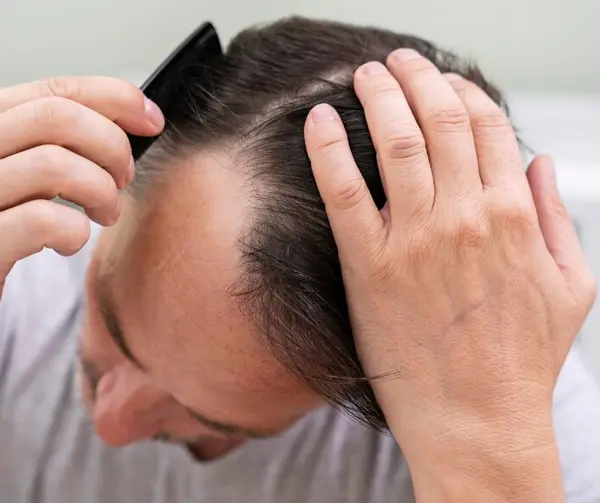
- Diffuse hair thinning across the scalp rather than patchy loss
- Increased daily shedding, particularly noticeable during washing or brushing
- Weak, brittle, or dry hair strands
- Eyebrow thinning, especially at the outer third (known as Hertoghe’s sign in hypothyroidism)
- Slower hair growth overall
- Hair loss may also affect eyelashes and body hair in some cases
Early Signs on Skin
- Dry, rough, or dehydrated skin that does not respond to regular moisturisers
- Pigmentation, especially around the eyes, neck, and mouth
- Persistent dullness and loss of natural glow
- Puffiness on the face, particularly under the eyes
- Increased skin sensitivity, redness, or itching
- Cold, coarse skin texture
Clinical Note
These early signs often go unnoticed or are attributed to lifestyle factors such as stress, diet, or seasonal changes. Recognising the connection between thyroid imbalance, hair fall, and skin changes can prevent prolonged untreated hormonal disruption and its long-term effects on hair density and skin health.
2. How Thyroid Disorders Cause Hair Fall and Thinning
Thyroid disorders directly interfere with the hair growth cycle. Even mild hormonal fluctuations can trigger noticeable hair fall and thinning, often before other thyroid symptoms are identified.
How Thyroid Hormones Disrupt the Hair Growth Cycle
Healthy hair cycles through three phases: anagen (active growth), catagen (transition), and telogen (shedding). Thyroid hormones regulate this cycle, keeping follicles active and growth predictable.
When the thyroid becomes underactive (hypothyroidism) or overactive (hyperthyroidism), this rhythm is disturbed:
- More follicles are pushed into the telogen (shedding) phase simultaneously
- The active growth phase shortens, reducing hair density over time
- This causes diffuse shedding across the entire scalp rather than localised patches
- The pattern is called secondary telogen effluvium when driven by a systemic hormonal cause
Thyroid hair loss affects up to 50% of patients with untreated thyroid disorders, and loss of the outer third of the eyebrows, combined with diffuse scalp thinning, is a hallmark indicating that thyroid dysfunction is driving hair fall.
3. Hypothyroidism vs Hyperthyroidism: Hair and Skin Differences
Both hypothyroidism (underactive thyroid) and hyperthyroidism (overactive thyroid) can cause hair and skin changes, but the patterns differ. Understanding which type is affecting you helps guide the right investigation and treatment.
| Symptom |
Hypothyroidism (Underactive) |
Hyperthyroidism (Overactive) |
| Hair texture |
Dry, coarse, brittle |
Fine, soft, silky |
| Hair fall pattern |
Diffuse thinning, slower regrowth |
Diffuse thinning, faster shedding rate |
| Eyebrows |
Thinning at outer third (Hertoghe’s sign) |
May thin but less specific pattern |
| Skin texture |
Dry, rough, coarse, cold |
Moist, warm, smooth, flushed |
| Pigmentation |
Dark circles, periorbital pigmentation |
Less common; redness more typical |
| Puffiness |
Face and under-eye puffiness common |
Less typical; more flushing or heat intolerance |
4. How Thyroid Imbalance Triggers Skin Problems
Thyroid hormones affect collagen production, slow down skin cell renewal, disrupt the skin barrier, and increase melanin activity. When these processes are disrupted, the effects appear on the skin in several interconnected ways.
The Chain Reaction: How Thyroid Affects Skin
- Thyroid hormones fluctuate, disrupting normal T3 and T4 activity
- Skin cell turnover slows, leading to buildup of dead skin cells and early dullness
- Sebum production drops, causing dry, rough texture and dehydration
- Collagen production decreases, contributing to early signs of skin laxity and fine lines
- Melanin regulation becomes unstable, resulting in pigmentation and uneven skin tone
- Skin barrier weakens, increasing sensitivity, irritation, and redness
- Blood circulation reduces, making skin appear pale, coarse, or cold
- Fluid retention rises, causing puffiness, especially under the eyes
5. Does Hypothyroidism Cause Dark Circles and Pigmentation?
Yes. Hypothyroidism can contribute to dark circles and pigmentation through several mechanisms:
- Reduced blood circulation makes the under-eye area appear darker
- Weakened skin barrier increases the visibility of underlying vasculature
- Fluid retention causes puffiness that casts shadows under the eyes
- Unstable melanin regulation leads to patchy pigmentation, especially around the eyes, neck, and mouth
These skin changes often persist even after thyroid levels are medically controlled, which is when a dermatologist’s intervention for targeted skin treatment becomes relevant.
6. Is Thyroid Imbalance Permanent and Does It Affect Hair Long-Term?
DR. AMAN DUA, MBBS MD, FISHRS — CO-FOUNDER, AK CLINICS
“Thyroid imbalance is a manageable condition, and most thyroid-related hair fall and skin changes improve once hormonal levels are stabilised. Early evaluation is essential, as prolonged imbalance can extend the duration of hair thinning, dryness, and pigmentation.”
Key clinical points:
- Thyroid imbalance is not permanent but can become long-lasting if left untreated
- Hair loss in men with thyroid imbalance usually presents as diffuse thinning rather than the receding hairline or crown pattern of androgenetic alopecia
- Hair loss in women shows as diffuse widening of the parting and overall density reduction
- Recovery of hair density depends on how long the hormonal imbalance has been active and how well it is controlled with treatment
- Skin changes like dryness and pigmentation often take longer to resolve than the hair fall, and may need targeted dermatological treatment alongside hormonal stabilisation
7. Which Thyroid Blood Tests Help Diagnose Hormonal Imbalance?
To identify the root cause of thyroid-related hair fall or skin changes, specific blood tests assess hormone levels and detect autoimmune activity. A combination of tests gives a more complete picture than TSH alone.
| Test |
What It Detects |
Relevance to Hair and Skin |
| TSH (Thyroid-Stimulating Hormone) |
Underactive or overactive thyroid |
Primary screening test for thyroid-related hair fall |
| Free T3 |
Active hormone levels |
Influences the hair growth cycle and skin cell renewal rate |
| Free T4 |
Low hormone output |
Linked to thyroid skin symptoms and pigmentation |
| TPO Antibodies |
Autoimmune thyroid disease |
Identifies autoimmune-driven thyroid hair thinning (Hashimoto’s thyroiditis) |
| Thyroglobulin (TG) Antibodies |
Autoimmune activity when routine tests are normal |
Useful when persistent thinning exists despite normal TSH |
| Reverse T3 (rT3) |
Hormone conversion issues |
Helps in complex cases with persistent hair fall and fatigue |
Important: Thyroid blood tests should be ordered by a physician or endocrinologist, not self-administered. The combination of tests needed depends on your symptoms, history, and previous results. A dermatologist may refer you for thyroid testing if hair fall or skin patterns suggest a hormonal cause.
8. When to Seek a Dermatologist
Thyroid changes can quietly affect how you feel about your appearance. Ongoing hair fall, thinning, dryness, dark spots, or under-eye changes can affect confidence over time. When these concerns continue even after thyroid levels are treated medically, the skin and scalp may need a separate clinical evaluation.
You should seek a dermatologist when:
- Hair fall does not improve after thyroid levels are controlled
- Diffuse thinning or a widening part line persists
- Persistent dry skin, dullness, or rough texture remains
- Pigmentation patches are present, especially around the eyes, neck, or mouth
- Under-eye puffiness or dark circles continue
- Eyebrow thinning is noticeable
- Acne or skin sensitivity has worsened
- Sudden diffuse shedding (telogen effluvium) occurs
9. Treatment Options at AK Clinics
At AK Clinics, each patient undergoes a comprehensive evaluation where the dermatologist assesses the hormonal impact on the hair growth cycle, scalp condition and follicular activity, and skin barrier strength before recommending any treatment. Treatment plans are medical, structured, and personalised to the specific patterns seen in each individual case.
Hair Treatments for Thyroid-Related Hair Fall
Thyroid imbalance often causes diffuse hair thinning and persistent shedding, which needs medical support to stabilise the hair growth cycle. Treatments offered include:
Skin Treatments for Thyroid-Related Skin Concerns
If dryness, pigmentation, puffiness, or skin texture changes continue after hormone stabilisation, dermatologists evaluate the skin clinically and recommend targeted treatments. Options include:
- MNRF (Microneedling Radiofrequency) for skin tightening and texture
- Skin Boosters for hydration and barrier repair
- Medical Hydrafacial for deep cleansing and skin renewal
- Chemical Peels for pigmentation and uneven skin tone
- Botox and Fillers for puffiness and volume changes where clinically indicated
Book a Consultation at AK Clinics
If you are experiencing hair fall or skin changes related to thyroid imbalance, our dermatology team can evaluate your scalp, skin, and hormonal history and recommend a personalised treatment plan. Visit AK Clinics in Delhi, Ludhiana, or Bangalore. Call or WhatsApp: +91 97799 44207
Key Medical Takeaway
Thyroid imbalance can affect your hair and skin long before other symptoms appear, but most changes are treatable with timely diagnosis and the right medical care.
- Prolonged thyroid imbalance worsens hair thinning and slows recovery
- Hormonal shifts trigger persistent skin changes including dryness, pigmentation, and puffiness
- Hair and skin usually improve once thyroid levels are stabilised medically
- When residual hair or skin concerns remain after hormonal treatment, targeted dermatological care is the next step
10. Frequently Asked Questions
Women experience more thyroid imbalance due to hormonal fluctuations during pregnancy, the postpartum period, and menopause. This makes them more prone to thyroid-related hair fall, skin symptoms, and female hair loss patterns driven by hormonal changes. Women are also more commonly affected by autoimmune thyroid conditions such as Hashimoto’s thyroiditis.
Yes. Thyroid imbalance, particularly hypothyroidism, can cause eyebrow thinning, especially along the outer third. This is known as Hertoghe’s sign and occurs because low thyroid hormones slow follicle activity and shorten the hair growth cycle. It is one of the more specific signs that thyroid function should be investigated.
No shampoo can reverse thyroid-related hair thinning because the cause is hormonal, not topical. Dermatologists recommend gentle, sulphate-free shampoos that support scalp health without further irritating a sensitised scalp. Medical treatment to stabilise thyroid levels is the primary step. Shampoo can only complement, not replace, hormonal and medical management.
Yes. Thyroid imbalance can cause sudden diffuse hair shedding by pushing many follicles into the telogen (shedding) phase simultaneously. This is called telogen effluvium. It may appear as an unexpected increase in daily hair fall rather than gradual thinning. Shedding usually improves as thyroid hormone levels are stabilised with appropriate treatment.
A hair transplant is possible for thyroid patients, but only after a dermatologist evaluates thyroid stability, scalp condition, donor density, and the pattern of hair fall. Thyroid-related hair fall is diffuse, which means the donor area may also be affected. Once hormones are controlled and shedding has stabilised for an adequate period, a surgical assessment can determine whether transplantation is feasible and likely to produce lasting results.
Nutritional deficiencies commonly co-exist with thyroid conditions and can worsen hair shedding. Vitamins and nutrients that support recovery include Vitamin D, Vitamin B12, iron, zinc, and biotin. However, supplementation should be guided by blood test results and a doctor’s advice, as excess supplementation of some nutrients can also have adverse effects.
The cost varies based on the specific treatments recommended, such as PRP, GFC, skin boosters, or chemical peels, the number of sessions required, and the location. Metro cities such as Delhi and Bangalore typically have higher clinic overheads. A consultation at AK Clinics provides a clear, personalised treatment plan with transparent cost estimates before any commitment is made.
Disclaimer: This article is for informational and educational purposes only and does not constitute medical advice. Thyroid conditions vary from person to person. Always consult a qualified physician, endocrinologist, or dermatologist for diagnosis and treatment. Individual results may vary.










Leave a Comment