Most people who regret their hair transplant do not regret choosing surgery. They regret choosing the wrong clinic without asking the right questions first.
A consultation is not just a price discussion. It is your chance to assess the surgeon’s clinical judgement, understand exactly what the procedure involves, and set expectations grounded in reality, not in marketing. The questions you ask before surgery and the quality of the answers you receive will shape your outcome far more than most patients realise.
This guide walks you through the 7 most important questions to ask before committing to a hair transplant. For each question, you will find what a good answer looks like, what to watch out for, and why the question matters.
7 Questions to Ask Before Hair Transplant Surgery
Question 1: Am I Actually a Good Candidate Right Now?
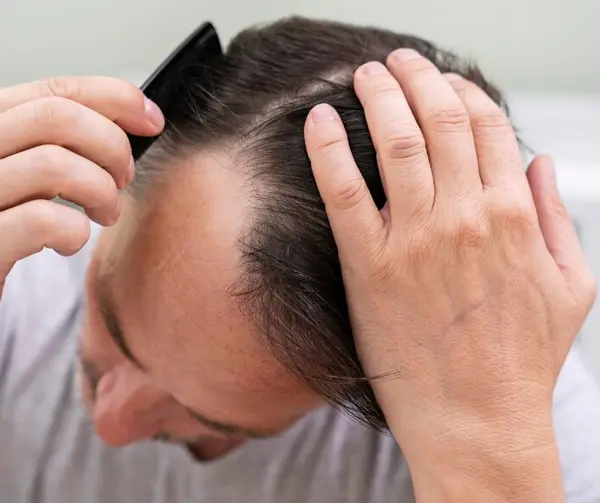
Before discussing techniques, graft counts, or costs, the most important question a surgeon should ask is whether you are ready for surgery at this stage of your hair loss journey. Not everyone experiencing hair loss is a suitable candidate for a transplant, and a responsible surgeon will tell you this honestly.
Whether you can undergo a hair transplant or not, a thorough candidacy assessment should go well beyond a visual inspection of your scalp. Here is what it should cover:
- Cause and stability of hair loss. Active, rapidly progressing hair loss is often better managed initially with PRP Hair Treatment or Hair Gain Therapy, with surgery considered later. Operating on an unstable scalp can produce results that look unnatural within a year or two.
- Age and future loss projection. Patients under 28 require special caution. The long-term hair loss pattern needs to be predictable enough to plan a hairline that will still look appropriate decades later.
- Scalp health and systemic factors. Iron levels, thyroid function, blood sugar, and current medications all affect surgical candidacy and healing. Your surgeon should ask about these factors, not just your hair-loss history.
Question 2: Which Hair Transplant Technique Is Right for Me and Why?
Any clinic that recommends the same procedure to every patient without a proper scalp assessment should raise a red flag. The technique should be chosen based on your hair type, donor density, degree of hair loss, and recovery needs.
Understand the landscape before your consultation. Standard FUE hair transplant involves extracting individual follicles from the donor area using a micro-punch tool. More advanced protocols, such as Bio-FUE, provide biological support during extraction and implantation to improve follicle survival and recovery. Ask your surgeon:
- Which specific technique are you recommending for my case, and what is the clinical rationale for that choice?
- Does your approach include any biological enhancement, such as PRP, at the graft storage or implantation stage, and does that affect my outcome?
- What graft survival rate does your clinic consistently achieve with this technique?
- Are there alternative options, such as Sapphire FUE or DHI, and when would they be more appropriate than the one you are recommending?
A surgeon who cannot give you a patient-specific answer to these questions and instead defaults to a generic description of the technique is worth questioning further. The right answer is always rooted in your scalp, not in what the clinic happens to offer.
👨⚕️
Dr Aman Dua, Co-Founder & Managing Director, AK Clinics:
“The technique conversation should never be one-sided. We always explain to patients exactly why a particular approach suits their scalp, hair characteristics, and goals. If a surgeon cannot connect their recommendation to your individual case, that is worth questioning.”
Question 3: What Are Your Qualifications and Personal Case Count?
Selecting a hair transplant surgeon requires careful research, similar to any major medical decision. Credentials and experience matter, but what often matters most is distinguishing a surgeon’s individual case success from the clinic’s overall results, a distinction many patients overlook.
Here is what to verify before your consultation proceeds:
- Valid medical qualification and council registration. Your surgeon should hold an MBBS degree, be registered with the Medical Council of India (MCI) or the National Medical Commission (NMC), and be legally authorised to perform surgical procedures. Postgraduate training in dermatology, plastic surgery, or a recognised hair restoration programme further demonstrates clinical expertise. Do not hesitate to request proof of registration. Any qualified surgeon will be happy to provide it.
- Membership of ISHRS or AHRS India. Both the International Society of Hair Restoration Surgery and the Association of Hair Restoration Surgeons India require adherence to ethical standards and continuing medical education. Membership is publicly verifiable.
- Personal case count and graft wastage rate. Ask specifically how many procedures the operating surgeon has performed and what their average graft survival rate is. These figures reveal clinical precision far better than broad clinic statistics.
- Request before-and-after photographs only from the operating surgeon’s own patient cases. Stock images or pooled clinic results are unreliable indicators of individual surgical skill.
👨⚕️
Dr Kapil Dua, FISHRS | Co-Founder & Chairman, AK Clinics:
“Patients sometimes feel awkward asking about credentials. I encourage everyone to ask. A surgeon confident in their training and track record will welcome the question without hesitation.”
Question 4: Who Will Actually Be Operating on Me?
This question is often skipped because patients assume the surgeon they consulted will perform the procedure. That assumption is worth confirming explicitly. In many clinics, the consulting surgeon handles the first stage of the procedure, while trained assistants perform graft extraction or implantation. Understanding who does what and at which stage gives you a clearer picture of what you are paying for.
Before you confirm your booking, ask these questions directly:
- Who performs the donor extraction and recipient-site incisions? The angle, depth, and direction of each incision determine whether your result looks natural or artificial. This cannot be delegated.
- How many procedures does the surgical team perform simultaneously on a given day?
The right answer to these questions should be specific. If the surgeon deflects or offers vague reassurances like ‘we always have a doctor present,’ ask again more directly. What you are listening for is confirmation that the person you consulted will also be the one making every surgical decision on the day of surgery.
At AK Clinics, every surgical step is performed exclusively by qualified, experienced hair transplant surgeons. This is a non-negotiable clinical standard, fully aligned with the guidelines set by the ISHRS and AHRS India, and something every patient can confirm directly during their consultation.
Question 5: How Many Grafts Do I Need, and Is My Donor Area Sufficient?
Graft count is one of the most discussed yet least understood aspects of hair transplant planning. The number that is right for you cannot be determined by looking at a photo or reading a general guide online. It can only come from a hands-on clinical assessment of your scalp, using the right instruments.
A responsible pre-surgical assessment at any quality clinic should cover all of the following:
- Donor density measurement — Trichoscopy determines how many follicular units per cm² are available in the donor zone and whether density is sufficient to cover the recipient area naturally.
- Safe permanent zone mapping — Not all hair at the back of the scalp is DHT-resistant. The safe zone must be precisely identified to ensure that the extracted grafts remain permanent after transplantation.
- Future loss projection using the Norwood Scale — A surgeon should estimate your likely hair loss progression over 10 to 20 years and plan a graft count and hairline design that will still look natural at that stage.
👨⚕️
Dr. Kapil Dua, FISHRS | Co-Founder & Chairman, AK Clinics:
“When patients come to us for revision surgery, the most common finding is a depleted donor zone. A previous clinic extracted more than was appropriate, leaving the patient with almost no reserve for corrective work. Donor area protection is not conservative thinking. It is fundamental clinical ethics.”
Question 6: How Will My Hairline Be Designed, and Can I Approve It First?
Your hairline is the first thing people notice. It frames your face, defines how natural the result looks, and is permanent. That is why the hairline design conversation deserves dedicated time at your consultation, not a few minutes at the end after everything else has been agreed.
A well-designed hairline is never just about where the hair begins. It should take into account your facial proportions, age, hair texture, and the realistic likelihood of future hair loss behind the transplanted zone. If this step is skipped or treated as a formality rather than a genuine design conversation, that is worth pausing to consider. A hairline created without your informed input is one you will live with, regardless.
Question 7: What Do I Get for the Cost, and What Happens After Surgery?
Cost is usually the first question patients ask, but it should be one of the last factors in your decision. What matters more than the number is understanding exactly what it covers, what the expected outcome is, and how the clinic supports you after you leave. These three things belong in the same conversation.
Regarding cost, request a detailed written breakdown before committing. The quoted figure should clearly include anaesthesia, medications, a post-operative care kit, PRP sessions (if included), and follow-up visits. Ask specifically whether each of these is bundled or billed separately, as this varies significantly between clinics.
Post Hair Transplant Care and Results
Regarding hair transplant results, an honest surgeon will walk you through a realistic timeline rather than making broad promises. Transplanted hair typically sheds between weeks 2 and 6, which is normal. New growth begins around months 3 to 4. Meaningful density improvement becomes visible between months 6 and 9, and the final result settles at 12 to 18 months. Ask for a density estimate specific to your case, not a generic figure.
During aftercare, ask about the post-operative washing protocol, when physical activity can resume, and whether follow-up PRP Hair Treatment sessions are recommended as part of the longer-term plan. A clinic committed to your outcome should have a structured aftercare protocol that extends beyond the first two weeks and supports you throughout the full 12 to 18-month growth cycle. For a full overview of what to expect during recovery, read our complete guide to hair transplant side effects.
Quick Pre-Surgery Checklist
Before you confirm any procedure at any clinic, review the following:
- Hair loss cause and stability confirmed through clinical assessment
- Surgical candidacy verified and blood reports reviewed, where needed
- Surgeon’s credentials, ISHRS/AHRS India membership, and case count confirmed
- Full operative team roles explained for the day of surgery
- Technique recommendation explained with patient-specific clinical reasoning
- Hairline design previewed and approved before the surgery date is confirmed
- Overall cost breakdown received in writing
- Aftercare plan and follow-up schedule documented
Planning a Hair Transplant in India?
If you have reached this stage, the focus should not be solely on cost or technique, but on choosing the right surgeon and clinic. The quality of planning, execution, and long-term approach determines your final result.
If you are exploring treatment options, you can learn more about our clinic and approach in your city:
Each page will help you understand the process, expected results, and how procedures are performed under experienced surgical supervision.
For a personalised assessment based on your hair-loss stage and donor area, you can connect with our team:
Book Your Free Consultation
AK Clinics has dedicated hair transplant centres across India, each offering advanced procedures performed only by experienced surgeons. Consultations with our doctors are free.
Book a Free Consultation
Call or WhatsApp: +91 97799 44207
Frequently Asked Questions
Bio-FUE is a trademarked procedure developed exclusively by Dr Kapil Dua and Dr Aman Dua at AK Clinics. This procedure ensures improved graft survival ratio, and only 100% visible grafts are extracted and implanted for better results. Patients notice faster recovery and minimal to almost no scarring with this procedure.
Your surgeon will evaluate this via trichoscopic examination and by reviewing your hair loss history over the past 12 to 24 months. If hair loss continues, a structured course of PRP Hair Treatment or Hair Gain Therapy is usually suggested initially.
In many cases, yes.
Revision hair transplant surgery is a subspecialty at AK Clinics. Assessment focuses on the remaining donor capacity and the nature of the original issue, whether it is design-, technique-, or aftercare-related.
⚕️
Medical Disclaimer: This article is written for general informational and educational purposes only. It does not constitute personalised medical advice, diagnosis, or a treatment recommendation. Hair transplant candidacy, technique selection, and expected outcomes vary significantly between individuals and can only be assessed through a clinical consultation with a qualified surgeon. Individual results may vary. AK Clinics recommends consulting a qualified hair restoration surgeon before making any surgical decision.










Leave a Comment