





AK Clinics
AK Clinics- India most trusted & recommended Hair, Skin, Cosmetic Surgery Clinics in India run by Dr. Kapil Dua & Dr. Aman Dua with a mission empowering one million indians to look and feel their best.
⚕️
“Shampoo se baal wapas aate hain… is this really true?”
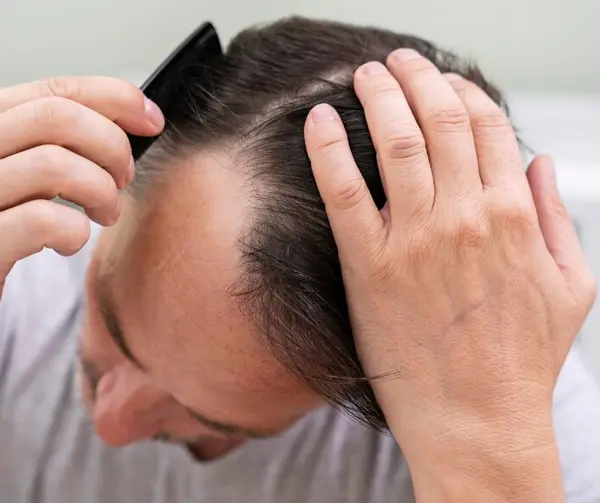
We have all seen these ads, promising that using the best shampoo for hair loss can stop hair fall and even regrow hair. It sounds simple: just change your shampoo, and everything is fixed.
But if it were really that easy, why is hair loss still so common?
The reality is that most pattern hair loss is linked to DHT (dihydrotestosterone), a hormone that gradually weakens hair follicles from within. That is why effective hair fall treatment often requires deeper solutions, such as DHT-blocking medicines, clinical therapies like PRP for hair loss, or advanced procedures such as a hair transplant that deliver long-term results.
So, where does a DHT-blocking shampoo actually stand? Can it truly stop hair loss, or does it mainly improve scalp health on the surface? Let us understand the science, ingredients, myths, and realistic expectations behind these shampoos.
Table of Contents
A DHT-blocking shampoo is a hair cleanser formulated with ingredients marketed to reduce DHT activity or support scalp health in people experiencing hair fall.
Unlike regular shampoos, these formulas may include ingredients such as ketoconazole, caffeine, saw palmetto, zinc, biotin, niacin, green tea, onion extract, or pumpkin seed oil.
They usually aim to:
However, it is important to understand that shampoos are not medicines. They remain on the scalp for only a few minutes before being rinsed off, limiting how deeply they can act.
The effectiveness of an anti-hair-loss shampoo depends on its ingredients, but most shampoo ingredients offer only supportive benefits.
Latest Addition: Copper Peptides
Copper peptides are becoming popular in newer anti-hair loss shampoos for their role in supporting scalp repair, reducing inflammation, and improving hair quality. However, in shampoo form, their effect is likely limited because the product is rinsed off quickly. They should be seen as scalp-supportive ingredients, not proven DHT blockers.
In reality, shampoos are primarily cleansing agents. They remain on the scalp for only 2 to 3 minutes before being rinsed off. Because of this short contact time, their ability to affect DHT at the follicular level is limited.
As Dr Aman Dua explains, shampoos can help maintain scalp hygiene and improve conditions such as oiliness, dandruff, or irritation, but they do not penetrate deeply enough to serve as a primary treatment for DHT-driven hair loss.
A regular shampoo removes dirt, sweat, and oil. A DHT-blocking shampoo does the same, with added ingredients that may offer mild scalp-level support.
When choosing an anti-hair loss shampoo, you will generally find three main types.
These include active ingredients such as ketoconazole or zinc-based compounds. They are useful when hair fall is linked to dandruff, itching, or scalp inflammation.
These focus on improving shine, volume, and breakage control. They may temporarily make hair look thicker but have limited medical impact.
These contain ingredients such as saw palmetto, onion extract, green tea, or pumpkin seed oil. They may support scalp health, but should not be considered a complete solution for hair loss.
What’s Trending in 2026
Newer hair loss shampoo trends include copper peptides, peptide complexes, scalp microbiome-friendly formulas, ceramides, niacinamide, hyaluronic acid, glycolic acid, and exosome-inspired claims. These ingredients may support scalp health, but most are still better viewed as supportive care rather than proven DHT-blocking or hair-regrowth solutions.
A regular shampoo primarily removes dirt, sweat, oil, and product buildup from the scalp. A DHT-support shampoo does the same, but with added ingredients that may support scalp health or mildly influence the scalp environment.
| Regular Shampoo | DHT-Support Shampoo |
|---|---|
| Cleans dirt, sweat, and oil | Cleans the scalp and may include scalp-supportive ingredients |
| Works mainly as a hygiene product | May support dandruff, oiliness, or inflammation control |
| Does not target hair fall causes | May offer supportive care, but not root-level correction |
Choosing the best shampoo for hair loss should depend on your scalp condition, not just the product claim. A shampoo that works for an oily, dandruff-prone scalp may not suit someone with a dry or sensitive scalp.
Since shampoos stay on the scalp for only a few minutes, their role is mainly to clean the scalp, reduce buildup, and support a healthier scalp environment. If hair loss is due to DHT-driven follicular miniaturisation, shampoos alone may not be enough, and stronger options such as DHT-blocking medicines, PRP for hair loss, or other treatments may be considered after diagnosis.
| Shampoo May Help If… | Do Not Rely on Shampoo Alone If… |
|---|---|
| You have an oily scalp | You have visible thinning |
| You have dandruff or itching | You have a receding hairline |
| Hair fall is mild or recent | You have bald patches |
| You need scalp maintenance | Hair loss has been progressing for months or years |
Using the right product incorrectly can reduce its benefit. For better results:
There is a lot of confusion about hair loss shampoos, especially when products promise quick, visible results. From a medical perspective, the biggest issue is misunderstanding what shampoos are designed to do.
Dr Aman Dua, MBBS MD, FISHRS — Co-Founder and Chief Dermatologist, AK Clinics
“Shampoos are primarily cleansing agents that remain on the scalp for only a short time. They help maintain scalp hygiene, but they are not designed to treat the root cause of hair loss. A DHT-blocking shampoo can support your routine, but long-term results depend on addressing hair loss at the follicle level.”
Medical explanation: Shampoos act mainly on the scalp surface. They can improve hygiene and reduce inflammation, but they do not significantly influence the hair growth cycle. Meaningful regrowth usually requires deeper treatment.
Medical explanation: Herbal shampoos may provide mild anti-inflammatory or conditioning benefits, but their ability to influence DHT activity is minimal. They are not sufficient as a standalone solution for DHT-driven hair loss.
Medical explanation: Excessive shampooing can disturb the scalp barrier and natural oil balance. This may lead to dryness, irritation, and increased shedding instead of improvement.
Medical explanation: Hair loss, especially androgenetic alopecia, is multifactorial and progressive. It involves hormonal, genetic, and follicular changes that shampoo alone cannot address.
Changing shampoo may not be enough if you notice:
Dermatologists emphasise that setting realistic expectations before using any hair loss product or treatment is essential. A DHT-blocking shampoo can support scalp health, but its role is limited to surface-level care. It may help improve scalp hygiene, oil control, dandruff, and irritation, but it cannot reverse DHT-related hair loss at the level of the hair follicle.
A shampoo can help with early-stage thinning, oily scalp, or as a supportive step alongside other treatments. However, it is not advisable to rely on shampoo alone if you have visible thinning, a receding hairline, or long-standing hair fall.
Hair loss caused by DHT is a progressive follicular process. To understand how DHT affects hair and what works at a deeper level, read our detailed guide on 12 Most Powerful Natural DHT Blockers That Stop Hair Loss.
⚕️

AK Clinics- India most trusted & recommended Hair, Skin, Cosmetic Surgery Clinics in India run by Dr. Kapil Dua & Dr. Aman Dua.


Leave a Comment