Medical Disclaimer: This article is for informational and educational purposes only and does not replace medical advice. DHT-related hair loss can vary from person to person. Always consult a qualified dermatologist or hair specialist before starting any medicine, supplement, or hair loss treatment.
Can DHT-related hair loss be controlled naturally? Can you reduce the effect of DHT on hair without immediately starting medicines?
DHT, or dihydrotestosterone, is one of the main hormones linked with pattern hair loss in men and women. In people who are genetically sensitive to DHT, this hormone can slowly shrink hair follicles, making hair thinner, weaker, and less dense over time.
If you are searching for how to block DHT naturally, it is important to understand that natural methods primarily support hair health and may help reduce DHT-related triggers, rather than completely blocking DHT as medical treatments do.
For a complete understanding of DHT, causes, medicines, treatments, and long-term hair loss control, read our detailed guide on: DHT Blockers for Hair Loss: Causes, Treatments and How to Reduce DHT.
QUICK ANSWER — CAN YOU REDUCE DHT NATURALLY?
You cannot completely block DHT naturally, but you can reduce factors that make DHT-related hair loss worse. Natural care works best in early-stage thinning. The most effective approach covers:
- Diet — protein, iron, zinc, omega-3, and antioxidant-rich foods
- Natural DHT-supportive foods — pumpkin seeds, green tea, flaxseeds
- Scalp hygiene — dandruff control, mild shampoo, reduced oil build-up
- Sleep and stress management — 7 to 8 hours of sleep, regular exercise
- Deficiency correction — iron, vitamin D, B12, thyroid, PCOS
- Supplements — saw palmetto, pumpkin seed oil (only with expert advice)
What Is DHT and How Does It Cause Hair Loss?
DHT is a hormone made from testosterone. In some people, hair follicles are genetically sensitive to DHT. When DHT affects sensitive follicles, it can gradually cause them to shrink — and as a result, hair may become thinner, weaker, shorter, and less dense over time.
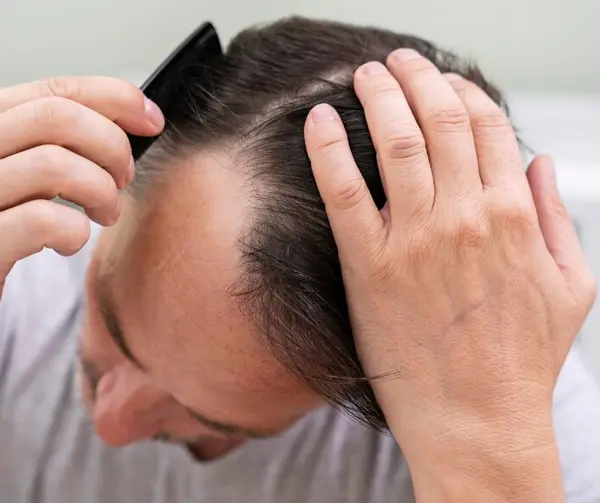
This type of hair loss commonly affects the hairline, temples, and crown area. It usually develops gradually, starting with reduced hair thickness, a slightly receding hairline, or mild crown thinning.
For a detailed explanation of this process, read our guide: What Is DHT and How It Causes Hair Loss.
Can You Reduce DHT Naturally?
You may not be able to completely block DHT naturally, but you can reduce the factors that make DHT-related hair loss worse. Natural care works best when hair thinning is in its early stage, by improving the scalp and follicular environment through diet, lifestyle, and correcting deficiencies.
Important: Natural methods are not a replacement for medical treatment in progressive hair loss. However, they can support existing hair and improve overall hair health — especially in the early stages of thinning.
1. Eat Nutrient-Rich Foods for Hair Growth
Diet plays an important role in hair strength and scalp health. Hair follicles need adequate protein, iron, zinc, omega fatty acids, vitamins, and antioxidants to function well. A poor diet, skipped meals, or sudden weight loss can make existing hair weaker and increase shedding.
| Nutrient |
How It Helps Hair |
| Protein |
Supports keratin, the main building block of hair |
| Omega fatty acids |
Support scalp health and reduce dryness |
| Iron |
Helps carry oxygen to hair follicles |
| Zinc |
Supports normal hair follicle function and inhibits 5-alpha-reductase |
| Antioxidants |
Protect hair follicles from oxidative stress |
| Vitamin D and B vitamins |
Support the normal hair growth cycle |
2. Natural DHT-Supportive Foods to Include
Some foods contain nutrients, antioxidants, or plant compounds that may support hair health and are often discussed as natural DHT-supportive foods. You can include:
- Pumpkin seeds
- Green tea
- Flaxseeds and chia seeds
- Spinach, tomatoes, and onions
- Almonds and walnuts
- Eggs
- Lentils and dals
- Paneer and curd
- Fish or chicken (if non-vegetarian)
Important Note
No single food can stop DHT-related hair loss on its own. These foods work best as part of a balanced diet that includes adequate amounts of protein, iron, zinc, omega-3 fatty acids, and vitamins. For a detailed food-wise guide, read: 12 Natural DHT Blocker Foods to Stop Hair Loss.
3. Take Enough Protein for Stronger Hair
Hair is mainly made of keratin, which is a type of protein. When protein intake is low, hair can become weak, dry, brittle, and more prone to shedding. This is especially important for people who skip meals, follow crash diets, or lose weight suddenly.
Good protein sources for hair health include:
- Eggs
- Dal and lentils
- Paneer, curd, and sprouts
- Soy and nuts and seeds
- Chicken or fish
Improving protein intake may not directly block DHT, but it supports stronger existing hair and reduces shedding caused by nutritional deficiency.
4. Keep Your Scalp Clean and Treat Dandruff Early
Good scalp hygiene helps reduce oil, dandruff, sweat, and build-up that can worsen hair fall. A clean, healthy scalp creates a better environment for hair growth, even though washing alone cannot permanently reduce DHT on the scalp.
Simple scalp care tips:
- Wash hair according to your scalp type
- Use a mild shampoo
- Treat dandruff early — do not leave it unattended
- Avoid scratching the scalp
- Avoid heavy oiling if you have dandruff or an oily scalp
- Limit harsh chemical treatments and frequent heat styling
5. Improve Sleep, Stress, and Exercise
Stress does not directly create DHT, but it can increase hair shedding. Poor sleep, late nights, illness, emotional stress, and sudden weight loss can all disturb the hair growth cycle.
What to do regularly:
- Sleep 7 to 8 hours each night
- Walk or exercise regularly
- Practice yoga or breathing exercises
- Avoid late nights and crash dieting
- Maintain a consistent daily routine
Watch out if hair fall started after:
- Fever or major illness
- Surgery or emotional stress
- Sudden weight loss
Useful to Know
Hair fall that starts after fever, illness, surgery, weight loss, or emotional stress is often linked to temporary shedding — not DHT. A hair specialist can identify whether your loss is due to DHT or another cause of hair loss.
6. Correct Deficiencies That Worsen Hair Fall
Hair fall is not always due to DHT alone. Deficiencies and health conditions can also increase shedding or weaken existing hair. Common hidden causes include:
- Low iron or vitamin D
- Low vitamin B12
- Thyroid imbalance
- PCOS
- Low protein intake
- Recent fever or illness
- Dandruff or scalp inflammation
Before starting random supplements: identify the real cause of hair fall. If the root cause is low iron, thyroid imbalance, vitamin deficiency, dandruff, or PCOS, the treatment approach will differ from reducing DHT. Correcting these issues can reduce unnecessary shedding and support stronger hair.
7. Use Natural DHT Blocker Supplements Carefully
Some supplements are commonly promoted as natural DHT blockers. These include:
- Saw palmetto
- Pumpkin seed oil
- Green tea extract
- Herbal hair supplements
However, natural does not always mean risk-free. These supplements may not be suitable for everyone and should not be started without advice.
Be cautious if you have thyroid issues, PCOS, hormonal imbalance, liver problems, pregnancy or breastfeeding, or ongoing medicines. Always take supplements only after consulting an expert.
Quick Summary: Natural Ways to Reduce DHT
| Focus Area |
What to Do |
| Diet |
Add protein, iron, zinc, omega-3, and antioxidant-rich foods |
| Scalp |
Control dandruff, oil, sweat, and build-up |
| Lifestyle |
Improve sleep, stress management, and regular exercise |
| Deficiencies |
Check iron, vitamin D, B12, thyroid, and PCOS |
| Supplements |
Use natural DHT blockers only with expert advice |
Foods and Habits to Avoid While Reducing DHT Naturally
While adding healthy foods is important, reducing habits that harm hair health is equally important. Avoid or limit:
- Too much sugar or junk food
- Frequent deep-fried foods
- Crash diets and skipping meals
- Smoking and excess alcohol
- Steroid use for bodybuilding
- Untreated dandruff
- Harsh chemical treatments
- Frequent heat styling
These factors may not always directly increase DHT, but they can weaken hair, irritate the scalp, and make existing hair loss more noticeable.
When Natural DHT Control Is Not Enough
Natural care can help in early hair thinning, but it may not be sufficient when follicles are already shrinking quickly. Natural methods alone may not be enough if:
- The hairline is moving back quickly
- The crown area is becoming visibly thin
- The scalp is clearly visible through the hair
- Hair is becoming finer and shorter each month
- Hair density is reducing despite natural care
- There is a strong family history of baldness
Early Action Matters
If these signs are present, it is better to consult a hair specialist early. Delaying treatment may allow follicles to weaken further over time, making it harder to restore density later.
What Dermatologists May Suggest Next
Depending on your hair-loss stage and cause, a dermatologist may recommend a combination of treatments. These can include:
The right treatment depends on your age, hair loss stage, scalp condition, family history, medical history, and expectations. Natural methods can still form part of a long-term maintenance plan alongside medical care.
DR. AMAN DUA — CO-FOUNDER AND CHIEF DERMATOLOGIST, AK CLINICS
“Natural ways can support DHT control and improve hair health, especially in the early stages of thinning. A balanced diet, adequate protein, a clean scalp, better sleep, lower stress, and correcting deficiencies can all support healthier hair — but not every natural remedy suits everyone. A specialist can identify whether DHT is the real cause and recommend what is safe and suitable for your specific stage of hair thinning.”
For expert guidance, consult Dr Aman Dua at AK Clinics, or book a consultation for a personalised evaluation and treatment plan.
Frequently Asked Questions
Natural methods may support early DHT-related hair thinning by improving diet, scalp health, sleep, stress management, and addressing deficiencies. However, they may not fully stop progressive genetic hair loss. If your hairline is receding or crown thinning is increasing, consult a dermatologist early for a proper evaluation.
Saw palmetto is commonly discussed as a natural DHT blocker because it may affect the enzyme that produces DHT. However, results vary from person to person. It should not be taken without advice, especially if you have hormonal issues, liver problems, are pregnant or breastfeeding, or are already taking other medicines.
Natural DHT blockers can help with early hair thinning, but they may not replace medications for progressive DHT-related hair loss. If the hairline is receding, the crown is thinning, or hair density is decreasing each month, a dermatologist may recommend medical treatment alongside natural care.
Women can follow natural methods such as a protein-rich diet, correction of iron and vitamin D levels, scalp care, stress management, and better sleep. However, women should avoid starting DHT blocker supplements without medical advice, especially in cases of PCOS, pregnancy, breastfeeding, hormonal imbalance, or thyroid issues.
Yes, minoxidil can usually be used alongside natural hair-support methods like improved diet, scalp hygiene, stress management, better sleep, and addressing deficiencies. Natural care supports overall hair health, while minoxidil works as a topical hair growth treatment. Use it only after a dermatologist’s advice.
See a dermatologist if hair fall continues for more than 6 to 8 weeks, the hairline is receding, the crown is thinning, the scalp is visible, or hair is becoming finer and weaker. Early diagnosis helps determine whether your hair loss is due to DHT, a deficiency, dandruff, stress, thyroid disease, PCOS, or another cause.
Disclaimer: This article is for informational and educational purposes only and does not constitute medical advice. DHT-related hair loss can vary from person to person. Always consult a qualified dermatologist or hair restoration specialist before starting any medication, supplement, or hair loss treatment. Individual results may vary.










Leave a Comment